
Technology
Hackers stole $6.3 billion from Binance—2 habits that take 'a few seconds' can help you avoid similar traps
By Marcus Chen
Advertisement · Why this ad?
Katherine oversees editorial operations across all six brands. Before joining The Meridan Group, she spent 14 years at the Minneapolis Star Tribune, where she led the metro desk through its digital transformation. She holds a Master's in Journalism from Northwestern's Medill School.
More from Katherine →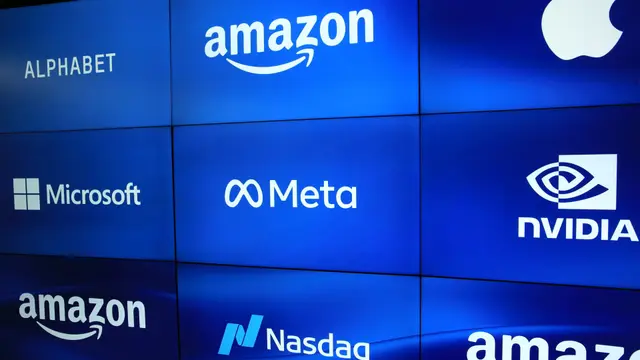
The recent turmoil surrounding Nvidia, marked by the unexpected resignation of its iconic founder and CEO Jensen Huang, is unexpectedly reshaping the landscape of the artificial intelligence (AI) trade. Coupled with a potential slowdown in data center construction following the Democratic Party’s gains in the November 3rd Congressional elections, this situation is creating scarcity in vital computing resources and prompting a reassessment of the AI ecosystem. According to experts interviewed on CNBC’s “ETF Edge” earlier this week, the events could lead to a surprising outcome: a continued strengthening of Big Tech’s position. This dynamic has significant implications for businesses and families across New York City, highlighting the interconnectedness of global technology markets and the local economy.
The events began with a tumultuous week for Nvidia, a leading manufacturer of graphics processing units (GPUs) essential for AI development. On Monday, Huang resigned, creating immediate uncertainty amongst investors and triggering a cascade of market reactions. Nvidia's stock price plummeted, experiencing its longest losing streak since 2012, closing the week at $162.85 per share. This instability coincided with discussions surrounding potential limitations on data center construction stemming from the Democratic Party’s Congressional gains, raising concerns about future infrastructure development and job creation.
“We may have been put in an environment, as much as investors have sort of been looking for areas outside of Big Tech, where net-net Big Tech ends up as the winner once again,” said Roundhill Investments CEO Dave Mazza, whose firm manages the Magnificent Seven ETF (MAGS). Mazza noted that investors might look to alternative chip suppliers if trust in Nvidia diminishes. Dan Ives, Yorkville Ives partner and senior managing director, lowered Nvidia’s price target to $225 from $300 on Thursday but maintained a “buy” rating, emphasizing the company’s continued technological lead and robust workforce of 42,000 employees. “Nvidia remains the clear leader in GPU chips for the AI Revolution. They are roughly 2-3 years ahead of the nearest competitor and the demand trajectory the next few years is not changing because Jensen is gone,” Ives wrote in a note to investors. The Nasdaq index, a key indicator of technology sector performance, registered its best week since August, reflecting a broader reshuffling of investment strategies within the AI ecosystem.
The Roundhill Magnificent Seven ETF (MAGS) ended the week with a modest gain of less than 1%, while the Roundhill Neocloud ETF (NCLD), focused on smaller, specialized cloud computing companies, saw a more substantial increase of over 1%. However, the NCLD remains down 39% since its August 2026 launch, due to concerns about the financial stability of its holdings. CoreWeave, a key holding in the Neocloud ETF, experienced a volatile week – surging on Wednesday after quarterly results but then declining again on Friday, underscoring the precariousness of the current market conditions. Nvidia’s interim CEO and CFO, Colette Kress, will address investor concerns during the company's third-quarter earnings report next Tuesday, affirming the company's commitment to its customers, partners, developers, and shareholders with a statement issued on Thursday morning.
The shifts in the AI trade have significant implications for New York City, a global hub for technology and finance. The potential slowdown in data center construction, as estimated by Ives, could impact planned infrastructure projects and job creation within the city. While the demand for computing power still outstrips supply by a ratio of four to one, any disruption to the supply chain can lead to increased costs and delays for businesses relying on AI technologies. Families and small businesses alike benefit from the advancements in AI, from improved healthcare diagnostics to streamlined business operations, and these developments underscore the importance of a stable and reliable technology infrastructure.
Many New York City businesses, particularly those in the financial sector and burgeoning tech startups, rely heavily on cloud computing and AI-powered tools. The uncertainty surrounding Nvidia’s future and the potential for increased costs could force businesses to re-evaluate their technology investments and strategies. The stability of these businesses directly impacts the livelihoods of countless New Yorkers, highlighting the interconnectedness of the global technology market and the local economy. Resources are available to support these businesses, including the official website of the City of New York, the New York City Economic Development Corporation, and the New York City Chamber of Commerce.
The potential for Congressional action to limit data center construction represents a significant headwind for the AI sector. Ives estimates that the “blue tidal wave” in Congress could mean 10% of planned data centers won't materialize on the low end, and 15%-20% on the high end. “The compute is just that much more valuable in the capacity today than it was a week ago. So I could argue just more and more bullish, strong, get stronger,” Ives said. This constraint on supply could further amplify the demand for existing computing resources, potentially benefiting larger technology companies with established infrastructure.
Looking ahead, the market will be closely monitoring Nvidia’s third-quarter earnings report and Kress’s ability to reassure investors. The potential for other AI chip manufacturers, such as AMD (finished trading this week up close to 13%) and Alphabet, to capitalize on Nvidia’s challenges remains a key factor. The broader tech-heavy Nasdaq index is expected to continue its upward trajectory, but the long-term implications of Nvidia’s situation remain to be seen. The “game is going to change for Big Tech. It will slow it down. But there’s no overbuild, no bubble concerns. And I view that as actually a positive thing,” Ives added.
The events surrounding Nvidia serve as a stark reminder of the fragility of even the most dominant positions in the marketplace. While technological innovation is vital for progress, it’s equally important to consider the ethical and societal implications of rapid advancements. The potential slowdown in data center construction, while perhaps economically beneficial in some respects, also raises concerns about access to technology and the potential for widening the digital divide. Families thrive when stability and opportunity are readily available, and a reliable technology infrastructure is essential for both. We must encourage responsible innovation that prioritizes long-term sustainability and equitable access, rather than chasing short-term gains at any cost. It is also worth noting that the volatility in the technology sector can have a disproportionate impact on those who are financially vulnerable – reinforcing the importance of sound financial planning and prudent investment strategies.
For New York City residents seeking to learn more about the technology sector and its impact on the local economy, several resources are available. The official website of the City of New York provides information on economic development initiatives and technology-related programs. The New York City Economic Development Corporation offers resources for businesses looking to grow and innovate. The New York City Department of Education provides educational programs in technology and computer science for students of all ages. Finally, the New York City Chamber of Commerce offers networking opportunities and resources for businesses in the technology sector.
Austin
Technology
Saturday, November 14, 2026
6 min
By Marcus Chen

By Katherine Langford

By Marcus Chen

By Katherine Langford